Reading List: 8 Novels Set in British Seaside Towns for Your Next Holiday
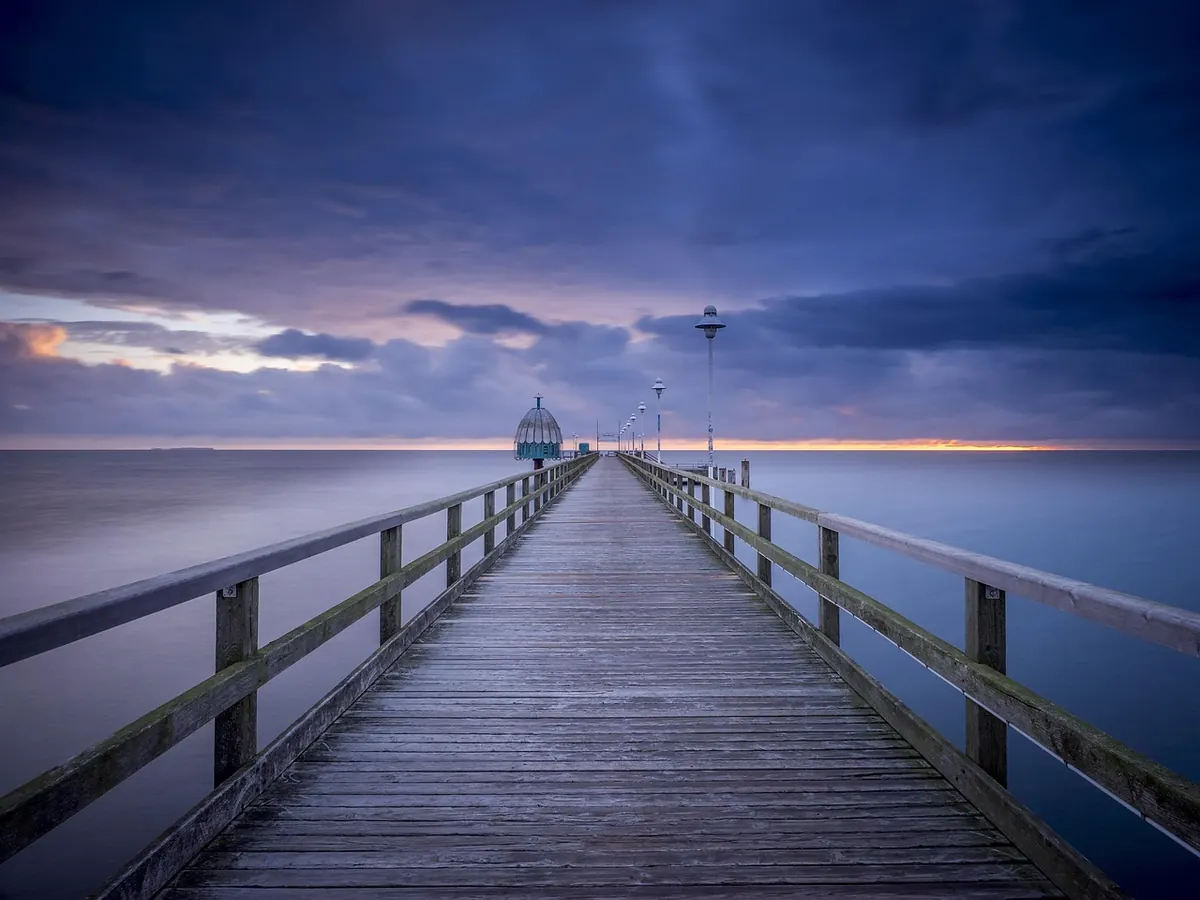
A seaside holiday and a good novel do similar work. Both slow you down and give you time to notice things: the light on the water, the way a small town behaves out of season, the rattle a shingle beach makes when the tide pulls back.
The eight books below all belong to particular stretches of British coast — Lyme Regis, Brighton, the Suffolk shore, a flat and lonely piece of Lancashire. Some are warm, some are unsettling, and one or two will change how a promenade looks on a wet Tuesday. Read them before you travel, or take one with you and save the last fifty pages for a bench on the seafront.
Classics That Made the Coast Their Own
The French Lieutenant's Woman — John Fowles (1969)
Fowles lived in Lyme Regis for decades, and the town is less a setting than a collaborator. Sarah Woodruff stands at the end of the Cobb, facing out to sea, and the whole novel turns on that image. The Cobb itself is a walk of a few minutes, but read the opening chapters first and you will notice the wind, the wet stone steps and the strange acoustics of a harbour wall.
It is also a book about fossil hunting, class and the Victorian habit of minding other people's business, so it pairs neatly with the Undercliff walk towards Axmouth and with any afternoon spent on the Jurassic Coast. Fowles gives you more than one ending; read all of them, and don't skip the final chapter on the train home.
Rebecca — Daphne du Maurier (1938)
Cornwall, a great house, a cove with a boathouse, and the sea as both memory and threat. Du Maurier's narrator arrives at Manderley as a second wife with no idea what she is walking into, and the coastal weather does much of the atmospheric work. Manderley is fictional, but the house is generally said to have been inspired by Menabilly, near Fowey, where du Maurier lived for years.
If you are heading to that stretch of coast, take the book rather than the Hitchcock film. The novel is quieter and stranger, and the beach scenes land harder when you have spent a morning on a Cornish path with the gorse closing in.
Brighton Rock — Graham Greene (1938)
Greene's Brighton is a day-tripper's town with something rotten underneath: the pier, the racecourse, cheap boarding houses and a teenage gang leader called Pinkie. It is not a cosy seaside read. It is, though, an excellent one for a train journey down, because the book moves at the pace of someone walking fast along the front with his collar up.
Read it before a weekend in Brighton and the town splits in two for you — the cheerful, loud, chip-shop version and the colder one Greene saw. Both are real. Walk the pier, then go and find a quiet street behind the seafront and read a chapter there.
Quieter Novels for Slow Coastal Days
The Bookshop — Penelope Fitzgerald (1978)
Florence Green opens a bookshop in Hardborough, a small East Anglian coastal town thinly disguised as Southwold. The building is damp, the poltergeist is unhelpful, and the local resistance is conducted entirely through good manners. It is short, dry and quietly devastating, and it will resonate with anyone who has ever daydreamed about leaving the city to run a shop by the sea.
Read it in one or two sittings. If you visit Southwold afterwards, the high street reads like a set of footnotes — and the book is a good reminder of how much weather and water shape a town's character.
The Shell Seekers — Rosamunde Pilcher (1987)
Penelope Keeling, her painter father, a much-loved canvas and a family that cannot agree on what to do with it. Much of the novel sits in Cornwall, in and around the fictional village of Porthkerris, and Pilcher writes the coast with real affection: gardens, tides, boats, long summer evenings that go on slightly too long.
This is the one to pack for a week rather than a weekend. It is generous, unhurried and unembarrassed about being comforting — exactly what you want when the forecast turns and you are happy to spend an afternoon indoors with a pot of tea.
On Chesil Beach — Ian McEwan (2007)
A honeymoon hotel near Chesil Beach in Dorset, 1962, and a young couple who cannot say what they mean. It is short enough to finish in an evening, and the tension builds out of ordinary details: a meal, a conversation, the sound of the sea through an open window.
A practical note if you plan to walk the beach itself — it is shingle, and shingle is exhausting underfoot. A mile is plenty. Read the book first, then go and stand on it and see how quickly the ground makes your point for you.
Two With a Chill in the Air
The Loney — Andrew
Photo: fradellafra / Pixabay