Interview: A British Historical Fiction Author on Researching the Regency Era
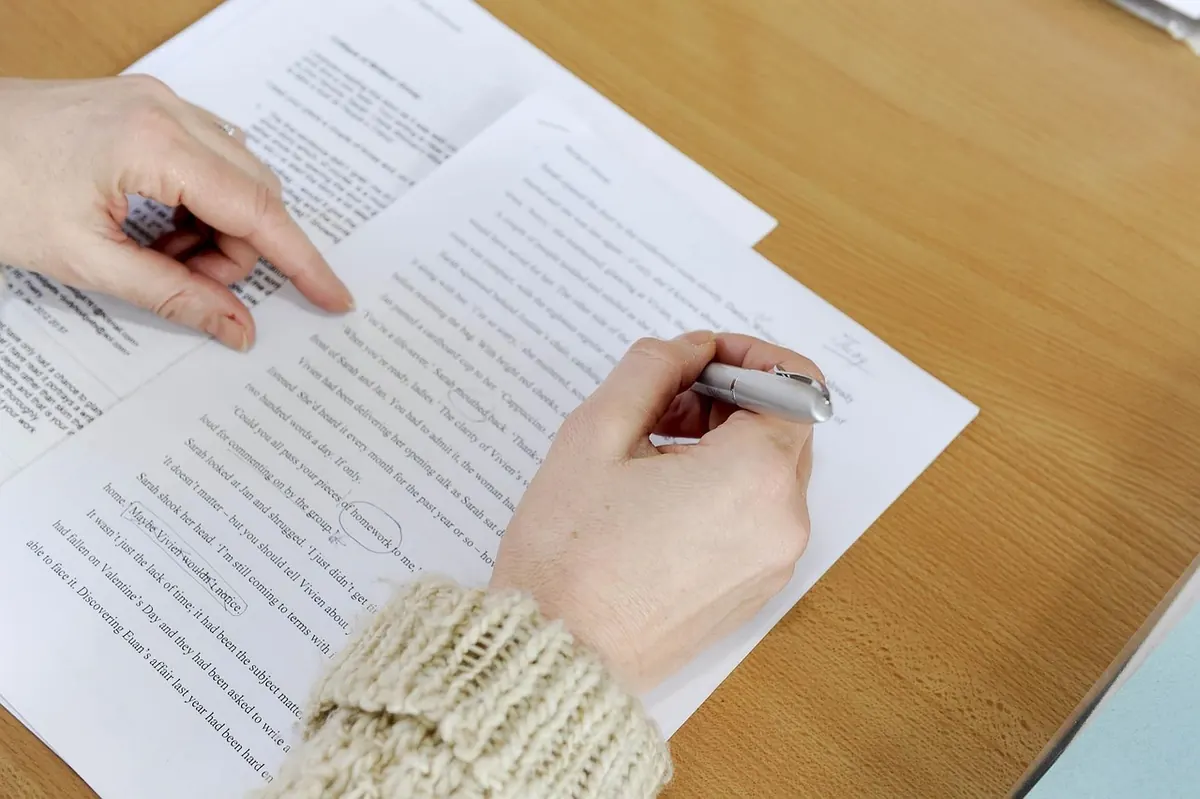
Ask a Regency novelist what she does all day and you might expect talk of ballrooms and bonnets. In practice, much of it looks closer to detective work: coaching timetables, wills, parish registers, the price of a seat on the mail coach, the opening hours of a circulating library. Over tea and a notebook bristling with sticky tabs, Ruth — who has been writing Regency-set fiction for more than a decade — talked me through how the research really works, and where she sees other writers come unstuck.
Her first piece of advice is not about sources at all. It is about order.
Date the year before you date the dress
“The word Regency is doing a lot of heavy lifting,” she says. Strictly, it covers 1811 to 1820, when the Prince of Wales governed as Prince Regent. In bookshops it stretches much further, often from the 1790s into the 1830s. Those decades were not interchangeable. A drawing room in 1805 and a drawing room in 1828 differ in silhouette, in manners, in what a young woman is allowed to say out loud.
So Ruth fixes a year and a place first, then works outward: who is in government, what Parliament is arguing about, whether it is a Season year for the family in question, what the weather has done to the harvest and the roads. Only then does she think about wallpaper. “Material details are the fun part, and they are the last thing you need. If the year is wrong, no amount of accurate wallpaper will save the scene.”
She offers a test. Take the same scene — a young woman arriving in London to stay with an aunt — and set it first in 1811 and then in 1819. In 1811 the war with France is still grinding on, prices are high, and the aunt’s household may be prospering on government contracts. By 1819 the war is over, the income tax has been abolished, the harvests have failed and the same aunt is far more likely to be economising. “Nothing in the room changes,” Ruth says, “and everything in the scene changes.”
That is why she keeps a timeline pinned above her desk: one line for the nation, one for the year’s weather and prices, one for her characters’ ages, marriages and deaths. “Continuity is research too,” she says. “If I have to stop and work out how old the eldest son was in 1813, I have already lost the scene.”
The sources that repay the effort
Ruth is cheerfully unsentimental about research. She wants sources that answer questions quickly, and she returns to the same handful.
- Newspapers and their advertisements. News tells you what people worried about; adverts tell you what things cost, what was new, and what a shop on a particular street sold. She reads a week of papers from her chosen year before drafting.
- Prints and caricatures. Gillray and Rowlandson are the obvious names, but any satirical print is useful for posture, furniture, clutter and the jokes people were making.
- Maps and guidebooks. Street layouts, distances, which squares were built and which were still fields. Walking a route on a map stops the geography in a scene from drifting.
- Letters, diaries and memoirs. The best source for tone. They show how people asked for things, teased each other and complained.
- Legal and criminal records. The Old Bailey Proceedings are digitised and searchable, and they are a gift: ordinary speech, ordinary problems, ordinary rooms.
- Household and trade manuals. Useful for servants’ duties, kitchens, medicines, and the sheer number of people required to run a house.
- Novels and poems published in the period. Reading one alongside a modern history is the quickest way to hear the rhythm of the prose. She keeps a shelf of the second-rate ones on purpose: minor novels show the ordinary conventions of the day more clearly than masterpieces do.
She is equally firm about what she avoids. Costume dramas, she says, are useful for mood and dangerous for fact. Other Regency-set fiction is worse, because it is the thing she might accidentally imitate. And she never researches a whole period when she only needs a Tuesday. “You can lose a fortnight to the history of the umbrella and write nothing at all.”
A worked example: one scene, four questions
To show how this works in practice, Ruth walked me through the opening of her third novel, in which a young woman travels from Shropshire to London in February 1816 — the year after Waterloo, and a famously cold, wet, hungry one.
Four questions shaped the chapter before a word of it was drafted.
- Which coach, from which inn, at what hour, and how long did the journey take?
- What did it cost, and who was paying?
- Who met her at the other end — and what did that person’s presence imply about the family’s money?
- What might she see from the window that a reader would recognise as 1816 rather than 1813?
“The answers changed everything,” she says. “I wanted her to travel alone, because it is more dramatic. Then I asked what a lone young woman of good family would actually be doing on a public coach, and the answer is either she takes a servant or she is making a statement. So I gave her a maid — and the maid turned out to be the most interesting person in the chapter.”
Where writers come unstuck
Ruth’s list of common failures is not about buttons or bonnets. It is about structure.
- Precedence. Who enters a room first, who may speak to whom, who writes and who waits to be written to. Get this wrong and the whole social engine of a scene stalls.
- Money. Vague fortunes make vague plots. If you do not know what your character’s income is, you cannot know what she can and cannot do.
- Language. Not slang so much as register. A modern word can be survivable; a modern attitude announced in period dress is not.
- Invisible labour. Servants appear when a plot needs them and vanish when it does not. Readers of historical fiction notice this faster than anything else.
- The Austen gravity well. Writing as though every household were a rectory or a country estate, and every heroine the second of five sisters, flattens a very wide world into one small one.
The arithmetic of a character’s life
If there is one practical habit Ruth would press on other writers, it is this: keep a page of numbers. A governess might earn twenty-five or thirty pounds a year plus her board. A curate might live on fifty. Five hundred a year could support a genteel household in a small way, and a thousand was comfort. The Bennet sisters’ thousand pounds apiece produces an income in the region of fifty pounds a year — which is exactly why the question of the entail matters so much in that novel, and why Ruth insists her own characters’ finances be settled before their love lives.
“Readers feel arithmetic even when they cannot see it,” she says. “A woman who can afford to hire a carriage has a different way of standing in a room from a woman who is counting the fare home.”
“Everything in a Regency novel is about what people can afford to do, and who is watching them do it. Research is just the business of finding out what those two things actually were.”
If you are starting out: a short, unglamorous list
- Choose a single year and write it at the top of every page of notes.
- Read one week of a newspaper from that year.
- Look up the price of three things: a coach fare, a pound of tea, a year’s wages for a maid.
- Find one map of your setting and walk your characters’ routes on it.
- Read a minor novel published in that year, then a modern history of it.
- Write the scene. Check it afterwards. Not before.
Ruth’s own system, she admits, is barely a system at all: a year, a map, a notebook of prices, and a willingness to be corrected. “The research is never finished,” she says, closing the notebook on a fresh forest of sticky tabs. “That is the whole trouble, and the whole pleasure. You stop when the scene works, and then you start the next one.”
Photo: WokinghamLibraries / Pixabay